Modern vehicles are engineered with a wide range of safety systems designed to reduce accidents and protect occupants during collisions. Over the last few decades, automobile manufacturers have integrated advanced technologies that help drivers avoid crashes and minimize injuries when accidents occur.
Car safety systems generally fall into two categories: active safety systems, which help prevent accidents, and passive safety systems, which protect passengers when a crash happens. Together, these technologies significantly improve road safety and reduce the severity of injuries.
Understanding Car Safety Systems
Car safety technology is designed to detect risks, assist drivers, and protect occupants. These systems rely on sensors, electronic control units, mechanical components, and software algorithms that work together in real time.
Key goals of modern vehicle safety systems include:
- Preventing accidents before they occur
- Maintaining vehicle stability and control
- Protecting passengers during a collision
- Reducing the severity of injuries
Automotive engineers continuously refine these systems to meet strict safety regulations and improve real-world crash protection.
Active Safety Systems: Preventing Accidents
Active safety systems operate before a crash occurs. They monitor road conditions, driver input, and vehicle movement to help avoid dangerous situations.
Anti-lock Braking System (ABS)
ABS prevents the wheels from locking during sudden braking. When the wheels lock, the driver loses steering control. ABS automatically adjusts brake pressure so the driver can maintain steering while stopping quickly.
Benefits of ABS include:
- Improved steering control during emergency braking
- Reduced skidding on slippery surfaces
- Shorter stopping distances in many situations
Electronic Stability Control (ESC)
Electronic Stability Control helps keep the vehicle stable during sharp turns or slippery road conditions. The system detects when the vehicle begins to skid and automatically applies brakes to individual wheels to restore stability.
ESC can:
- Prevent spin-outs
- Reduce rollover risk
- Maintain control in sudden maneuvers
Traction Control System (TCS)
Traction control prevents wheel spin when accelerating on wet, icy, or uneven roads. By adjusting engine power or applying braking force, the system improves grip between tires and the road surface.
Advanced Driver Assistance Systems (ADAS)
Modern vehicles often include ADAS technologies that use radar, cameras, and sensors to monitor the surroundings.
Common ADAS features include:
- Automatic Emergency Braking (AEB) – Detects potential collisions and automatically applies brakes
- Lane Departure Warning – Alerts the driver if the car drifts out of its lane
- Blind Spot Monitoring – Warns drivers of vehicles in hard-to-see areas
- Adaptive Cruise Control – Maintains a safe distance from the vehicle ahead
These systems significantly reduce the likelihood of accidents caused by human error.
Passive Safety Systems: Protecting During a Crash
Passive safety systems activate when a collision occurs. Their primary purpose is to reduce injury to drivers and passengers.
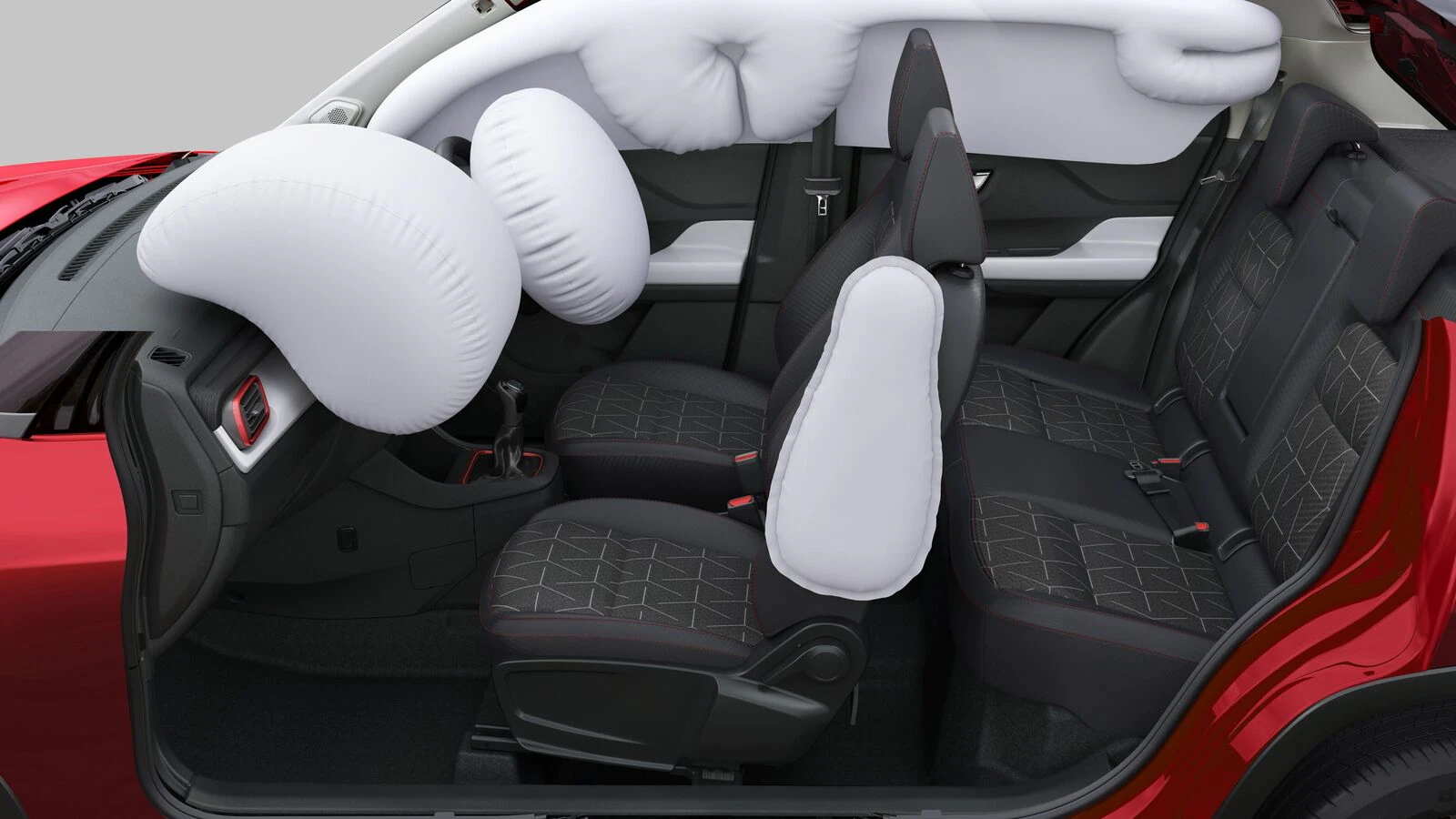
Airbags
Airbags deploy within milliseconds during a crash. They create a cushion that prevents occupants from striking hard interior surfaces such as the steering wheel or dashboard.
Modern cars may include multiple airbags:
- Front airbags
- Side airbags
- Curtain airbags
- Knee airbags
These airbags distribute crash forces across a larger area of the body, lowering the risk of serious injuries.
Seat Belts and Pretensioners
Seat belts are one of the most effective safety devices in a vehicle. They hold passengers securely in place during sudden deceleration.
Many modern vehicles use pretensioners, which tighten the seat belt instantly during a crash to remove slack and position occupants correctly.
Crumple Zones
Crumple zones are specially engineered areas of the vehicle designed to absorb and dissipate crash energy. Instead of transferring the full force of the impact to passengers, these sections deform in a controlled way.
This design helps:
- Reduce the impact force reaching occupants
- Protect the passenger cabin
- Lower the risk of severe injuries
Reinforced Passenger Cabin
The passenger compartment is built using high-strength steel and reinforced structures to maintain its shape during a collision. This rigid safety cage protects occupants from intrusion caused by external impacts.
Smart Safety Features in Modern Vehicles
Advances in automotive technology have introduced smarter safety systems that combine sensors, computing power, and artificial intelligence.
Examples include:
- Driver monitoring systems that detect fatigue or distraction
- Automatic parking assistance that prevents low-speed collisions
- Traffic sign recognition that alerts drivers to speed limits and warnings
- Rear cross-traffic alerts that detect vehicles when reversing
These innovations help drivers remain aware of their surroundings and reduce human error.
The Role of Crash Testing
Automotive safety systems are validated through rigorous crash testing and simulation. Vehicles are tested under different conditions to ensure they meet global safety standards.
Testing evaluates:
- Structural strength
- Airbag deployment timing
- Seat belt effectiveness
- Impact energy absorption
Independent safety organizations also rate vehicles based on their crash performance, helping consumers choose safer cars.
Why Car Safety Systems Matter
Road accidents remain a major cause of injuries worldwide. Effective safety systems can prevent collisions, protect passengers, and save lives.
When drivers choose vehicles with advanced safety features, they benefit from:
- Reduced risk of severe injuries
- Better vehicle control in emergencies
- Improved protection for passengers and pedestrians
As technology evolves, future vehicles will continue to integrate even more sophisticated safety systems.
FAQ
1. What is the difference between active and passive car safety systems?
Active safety systems help prevent accidents, while passive safety systems protect passengers during a crash.
2. Are airbags effective without seat belts?
Airbags are designed to work together with seat belts. Without a seat belt, airbags may not provide optimal protection.
3. Do safety systems reduce accidents significantly?
Yes. Technologies like automatic emergency braking and stability control have been shown to significantly reduce crash rates.
4. How often should car safety systems be checked?
Safety systems should be inspected during regular vehicle servicing and whenever warning lights appear on the dashboard.
5. Can safety systems fail during an accident?
Modern systems undergo strict testing and are highly reliable, but proper maintenance and functioning sensors are essential for optimal performance.
6. Are advanced driver assistance systems fully autonomous?
No. Most ADAS features assist the driver but do not replace human control. Drivers must remain attentive.
7. Which safety feature is the most important?
Seat belts remain the single most effective safety feature, but the best protection comes from a combination of multiple safety technologies working together.