Auto

Auto

How Car Safety Systems Protect Drivers

Modern vehicles are engineered with a wide range of safety systems designed to reduce accidents and protect occupants during collisions. Over the last few decades, automobile manufacturers have integrated advanced technologies that help drivers avoid crashes and minimize injuries when accidents occur.

Car safety systems generally fall into two categories: active safety systems, which help prevent accidents, and passive safety systems, which protect passengers when a crash happens. Together, these technologies significantly improve road safety and reduce the severity of injuries.

Understanding Car Safety Systems

Car safety technology is designed to detect risks, assist drivers, and protect occupants. These systems rely on sensors, electronic control units, mechanical components, and software algorithms that work together in real time.

Key goals of modern vehicle safety systems include:

  • Preventing accidents before they occur
  • Maintaining vehicle stability and control
  • Protecting passengers during a collision
  • Reducing the severity of injuries

Automotive engineers continuously refine these systems to meet strict safety regulations and improve real-world crash protection.

Active Safety Systems: Preventing Accidents

Active safety systems operate before a crash occurs. They monitor road conditions, driver input, and vehicle movement to help avoid dangerous situations.

Anti-lock Braking System (ABS)

ABS prevents the wheels from locking during sudden braking. When the wheels lock, the driver loses steering control. ABS automatically adjusts brake pressure so the driver can maintain steering while stopping quickly.

Benefits of ABS include:

  • Improved steering control during emergency braking
  • Reduced skidding on slippery surfaces
  • Shorter stopping distances in many situations

Electronic Stability Control (ESC)

Electronic Stability Control helps keep the vehicle stable during sharp turns or slippery road conditions. The system detects when the vehicle begins to skid and automatically applies brakes to individual wheels to restore stability.

ESC can:

  • Prevent spin-outs
  • Reduce rollover risk
  • Maintain control in sudden maneuvers

Traction Control System (TCS)

Traction control prevents wheel spin when accelerating on wet, icy, or uneven roads. By adjusting engine power or applying braking force, the system improves grip between tires and the road surface.

Advanced Driver Assistance Systems (ADAS)

Modern vehicles often include ADAS technologies that use radar, cameras, and sensors to monitor the surroundings.

Common ADAS features include:

  • Automatic Emergency Braking (AEB) – Detects potential collisions and automatically applies brakes
  • Lane Departure Warning – Alerts the driver if the car drifts out of its lane
  • Blind Spot Monitoring – Warns drivers of vehicles in hard-to-see areas
  • Adaptive Cruise Control – Maintains a safe distance from the vehicle ahead

These systems significantly reduce the likelihood of accidents caused by human error.

Passive Safety Systems: Protecting During a Crash

Passive safety systems activate when a collision occurs. Their primary purpose is to reduce injury to drivers and passengers.

Airbags

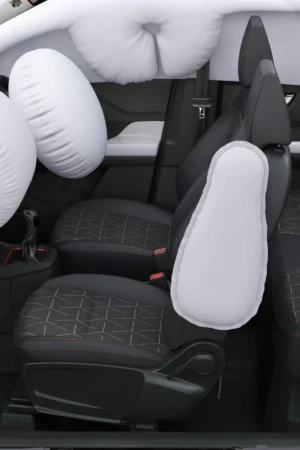
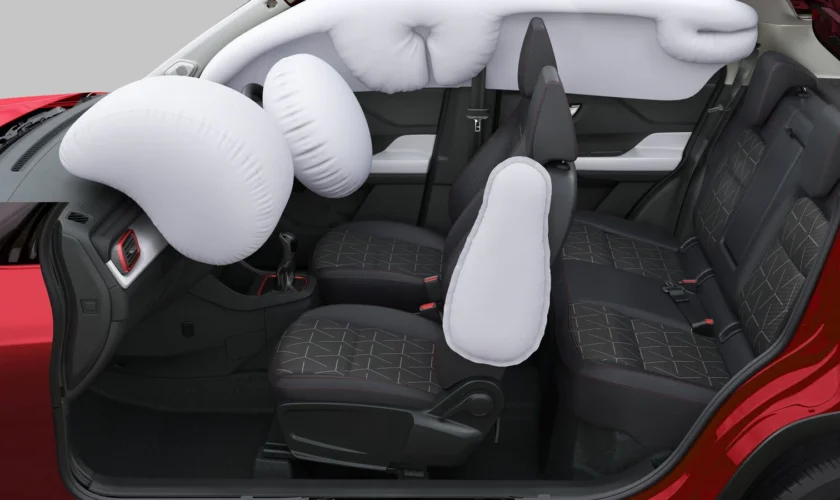
Airbags deploy within milliseconds during a crash. They create a cushion that prevents occupants from striking hard interior surfaces such as the steering wheel or dashboard.

Modern cars may include multiple airbags:

  • Front airbags
  • Side airbags
  • Curtain airbags
  • Knee airbags

These airbags distribute crash forces across a larger area of the body, lowering the risk of serious injuries.

Seat Belts and Pretensioners

Seat belts are one of the most effective safety devices in a vehicle. They hold passengers securely in place during sudden deceleration.

Many modern vehicles use pretensioners, which tighten the seat belt instantly during a crash to remove slack and position occupants correctly.

Crumple Zones

Crumple zones are specially engineered areas of the vehicle designed to absorb and dissipate crash energy. Instead of transferring the full force of the impact to passengers, these sections deform in a controlled way.

This design helps:

  • Reduce the impact force reaching occupants
  • Protect the passenger cabin
  • Lower the risk of severe injuries

Reinforced Passenger Cabin

The passenger compartment is built using high-strength steel and reinforced structures to maintain its shape during a collision. This rigid safety cage protects occupants from intrusion caused by external impacts.

Smart Safety Features in Modern Vehicles

Advances in automotive technology have introduced smarter safety systems that combine sensors, computing power, and artificial intelligence.

Examples include:

  • Driver monitoring systems that detect fatigue or distraction
  • Automatic parking assistance that prevents low-speed collisions
  • Traffic sign recognition that alerts drivers to speed limits and warnings
  • Rear cross-traffic alerts that detect vehicles when reversing

These innovations help drivers remain aware of their surroundings and reduce human error.

The Role of Crash Testing

Automotive safety systems are validated through rigorous crash testing and simulation. Vehicles are tested under different conditions to ensure they meet global safety standards.

Testing evaluates:

  • Structural strength
  • Airbag deployment timing
  • Seat belt effectiveness
  • Impact energy absorption

Independent safety organizations also rate vehicles based on their crash performance, helping consumers choose safer cars.

Why Car Safety Systems Matter

Road accidents remain a major cause of injuries worldwide. Effective safety systems can prevent collisions, protect passengers, and save lives.

When drivers choose vehicles with advanced safety features, they benefit from:

  • Reduced risk of severe injuries
  • Better vehicle control in emergencies
  • Improved protection for passengers and pedestrians

As technology evolves, future vehicles will continue to integrate even more sophisticated safety systems.

FAQ

1. What is the difference between active and passive car safety systems?

Active safety systems help prevent accidents, while passive safety systems protect passengers during a crash.

2. Are airbags effective without seat belts?

Airbags are designed to work together with seat belts. Without a seat belt, airbags may not provide optimal protection.

3. Do safety systems reduce accidents significantly?

Yes. Technologies like automatic emergency braking and stability control have been shown to significantly reduce crash rates.

4. How often should car safety systems be checked?

Safety systems should be inspected during regular vehicle servicing and whenever warning lights appear on the dashboard.

5. Can safety systems fail during an accident?

Modern systems undergo strict testing and are highly reliable, but proper maintenance and functioning sensors are essential for optimal performance.

6. Are advanced driver assistance systems fully autonomous?

No. Most ADAS features assist the driver but do not replace human control. Drivers must remain attentive.

7. Which safety feature is the most important?

Seat belts remain the single most effective safety feature, but the best protection comes from a combination of multiple safety technologies working together.
read more
Auto

Auto UK: A Complete Guide to the Automotive Industry in the United Kingdom

The UK automotive industry, often referred to as Auto UK, plays a central role in the country’s economy, innovation, and employment. With a heritage that includes some of the world’s most iconic car brands, the sector today blends tradition with modern advancements such as electric mobility, connected technologies, and sustainable practices. For individuals and businesses alike, understanding the state of Auto UK is key to recognising its challenges and opportunities.

The Importance of Auto UK in the National Economy

The automotive sector contributes significantly to the UK economy, both in direct manufacturing output and in the wider supply chain. It is a critical employer, provides skilled jobs, and supports regional economies across England, Scotland, Wales, and Northern Ireland. Beyond factories, Auto UK also encompasses dealerships, aftersales services, research centres, and logistics networks.

Key Economic Contributions

  • Billions in annual exports, with vehicles ranking among the UK’s top exported goods

  • Thousands of direct and indirect jobs, particularly in manufacturing hubs like the Midlands and North East

  • Continuous investment from international automotive groups in research and production facilities

  • Strong ties with universities and technical colleges to upskill the workforce

Manufacturing and Production Landscape

The UK boasts a rich tradition of vehicle manufacturing. Plants produce not only cars but also vans, trucks, and specialist vehicles. Many facilities serve both domestic and global markets, often exporting a majority of their output.

Leading Manufacturing Hubs

  • West Midlands: Known as the heart of UK automotive, home to several major plants and suppliers

  • North East England: Renowned for high-volume car production and advanced battery manufacturing

  • Scotland: Specialist vehicle production and an increasing role in EV supply chains

  • Wales: Growth in component manufacturing and green mobility solutions

Auto UK and Electric Mobility

The transition to electric vehicles (EVs) is a defining challenge and opportunity for the industry. With government policies pushing towards net zero emissions, manufacturers and suppliers are investing heavily in electrification.

Current Developments

  • Establishment of battery gigafactories to ensure localised supply chains

  • Expansion of charging infrastructure across motorways, cities, and rural areas

  • Increasing range of EV models from entry-level hatchbacks to luxury SUVs

  • Incentives encouraging consumers and businesses to adopt electric fleets

Challenges Ahead

  • Ensuring affordability and accessibility for all consumers

  • Managing supply chain risks related to raw materials

  • Developing adequate recycling solutions for batteries

  • Training technicians and engineers in EV-specific skills

Automotive Innovation and Technology

Auto UK is not only about vehicles on the road but also about shaping future mobility. Companies and research institutions are at the forefront of developing advanced automotive technologies.

Areas of Innovation

  • Autonomous driving: Testing self-driving vehicles in controlled environments

  • Connectivity: Cars integrated with smart city infrastructure and mobile technology

  • Sustainable fuels: Research into hydrogen fuel cells and biofuels as alternatives

  • Lightweight materials: Improving fuel efficiency and EV range

Policy and Regulation Shaping Auto UK

Government policies play a pivotal role in steering the automotive industry. Targets such as phasing out petrol and diesel cars, emissions standards, and trade agreements all influence the direction of Auto UK.

Policy Highlights

  • Commitment to phase out sales of new petrol and diesel cars in the coming decade

  • Investment funds to support research in clean mobility

  • Trade agreements ensuring access to European and global markets

  • Incentives for businesses adopting low-emission fleets

Consumer Trends in the UK Automotive Market

Consumers in the UK are increasingly conscious of sustainability, affordability, and convenience. Buying preferences are shifting towards greener, connected, and flexible solutions.

Key Trends

  • Rapid growth of EV adoption, particularly in urban areas

  • Rise of subscription models and car-sharing schemes

  • Demand for connected infotainment and driver-assist systems

  • Popularity of used vehicles as an affordable entry point into green mobility

Supply Chain and Global Connections

Auto UK is deeply interconnected with international supply chains. Many parts and technologies come from Europe, Asia, and North America, making logistics and trade agreements crucial to the industry’s stability.

Opportunities and Risks

  • Opportunities in reshoring supply chains to the UK for greater resilience

  • Risks from global disruptions, such as semiconductor shortages

  • Growing importance of sustainable sourcing and ethical practices

  • Expansion of UK-based suppliers into EV-specific components

Skills, Training, and Employment

With the industry shifting towards electrification and digitalisation, there is a growing demand for skilled workers. Auto UK depends on upskilling existing staff and attracting new talent.

Training Initiatives

  • Collaboration between automotive companies and universities

  • Apprenticeship programmes providing hands-on training

  • Government-funded initiatives for EV maintenance and repair skills

  • Continuous professional development in software, robotics, and AI for mobility

The Future of Auto UK

The future of the UK automotive industry lies in its ability to adapt, innovate, and remain competitive. From sustainability to digital transformation, Auto UK is navigating a period of rapid change. Success will depend on investment, collaboration, and consumer trust.


FAQs on Auto UK

What is the main role of Auto UK in the economy?
It drives exports, supports employment, and attracts foreign investment, making it one of the UK’s most valuable industries.

Are petrol and diesel cars still being produced in the UK?
Yes, but production is gradually being reduced as manufacturers shift to electric models in line with government policies.

How is the UK preparing for the electric vehicle transition?
Through the establishment of battery factories, nationwide charging networks, and financial incentives for both buyers and manufacturers.

Do UK consumers still prefer traditional cars over EVs?
While petrol and diesel cars remain popular, EV adoption is growing quickly, especially in cities where charging infrastructure is expanding.

Is the UK working on self-driving cars?
Yes, research centres and test zones are actively developing and trialling autonomous vehicle technologies.

How does Auto UK support small businesses?
The industry provides opportunities in supply chains, aftermarket services, and innovation hubs, enabling SMEs to thrive alongside global manufacturers.

What skills are most in demand in Auto UK right now?
EV maintenance, battery technology, software development, and robotics expertise are among the most sought-after skills.

read more
Auto

Cruiser Defensive Dress That works!

There is some extraordinary looking cruiser clothing available nowadays, yet accept me not all of the bike clothing offers as much assurance as you might suspect. In Europe, for cruiser apparel to be legitimately sold as “wellbeing clothing, it needs to pass a progression of European guidelines, which are quite extended however are accessible on my site. The principles cover the attire’s exhibition in scraped area, tearing and effect tests, and when they have passed; they are sold with the CE mark.

Insurance in the perfect spots…

Relatively few individuals understand that most cruiser wounds happen disgraceful. Your legs and feet are incredibly defenseless, so ensure that you wear a fair pair of high boots and some defensive jeans. The jeans ought to be supported at the knees and hips; preferably they ought to append to your coat by a zipper. Boots ought to be thick calfskin, with an underside that can flex with the foot however has a protection from smashing across the foot.

Customary material for bike clothing is cowhide, however thick nylon and other engineered materials function admirably as well. Kevlar built up pants are superior to ordinary pants .Typical pants last 0.6 seconds in the European standard scraped spot test, while defensive cruiser jeans will most recent 5 seconds or more. You would truly prefer not to be tearing your skin open inside not exactly a large portion of a moment of falling of your bicycle isn’t that right? Thought not.

Same standards apply to coats. Ensure they are hardwearing, in case they are calfskin ensure it is thick cowhide not design calfskin like a few coats. Sewing ought to be uniform with no dropped fastens, and all your “sharp pieces”, your elbows and shoulders ought to be built up, in a perfect world with some effect insurance included.

A good pair of gloves is an unquestionable requirement; your palms will be in danger in a mishap; you instinctually put out your hands palm side down to stop yourself in a slide, so the palms of your gloves ought to be supported with patches. Sewn Kevlar is particularly useful for this sort of scraped spot obstruction, however supported cowhide functions admirably as well.

Effect insurance can be repurchased independently like defenders, etc, however recall where your most weak regions are. Furthermore, ensure if you purchase sway insurance you really wear it! If you have any questions it could be smarter to go for cruiser clothing with a level of effect security included so you know when you put on your coat and jeans, the insurance is continually going to be there.

To wrap things up, select a protective cap you can wear and wear it generally. You might have a more noteworthy shot at getting harmed beneath the abdomen in a bike mishap, however the outcomes of being engaged with a mishap without a cap simply don’t bear pondering… .

In this way, whenever you are looking for cruiser clothing, give a touch of thought to the degree of security it offers before you get it. You never realize it could save you a great deal of pointless agony!

read more
Auto

What Precisely Are Pocketbikes?

Pocket bicycles, otherwise called little motos, are small scale measured cruisers averaging around 47 inches long and 18 inches tall.

Pocket bicycle, albeit adequately little to convey under one’s arm, are equipped for amazing velocities. They are generally worked with gas-controlled motors. The more modest modern motored models utilized by Junior class racers are equipped for rates of more than 35 mph, the normal 4.2 hp and 6.2 hp hustling models accomplish around 40-45 mph, and open class machines arrive at speeds more than 50 mph. Pocket bicycles can be worked with a large number of the elements normal to customary bicycles, for example, plate brakes toward the front and back, dashing tires, fairings, lightweight aluminum amalgam cast border casings and swing arms. Initially, pocket bicycles were exclusively made by claim to fame producers who sold them at costly costs. As their allure has developed, in any case, reasonable pocket bicycle imports have opened up to a lot bigger gathering of engine sport fans.

While numerous proprietors race their pocket bicycles at contests and go-kart tracks, others just appreciate riding their pocket bicycles in open neighborhoods. There are numerous choices for lawfully hustling your pocket bicycle with companions and in coordinated rivalries. A dashing endorsing body has been set up to advance hustling in North America called NAPRA, the North American Pocket Bicycle Hustling Affiliation. Go-kart tracks offer a street racecourse that is impeccably scaled to Pocket bicycles. Whatever your choiceScience Articles, it is yours to make. What’s more, it will be a great one. Nothing very matches Pocket bicycle hustling.

read more