Human-machine collaboration is rapidly reshaping the way people work, innovate, and solve complex problems. Advances in artificial intelligence, robotics, and data analytics have moved machines beyond simple automation. Today’s intelligent systems can analyze information, support decision-making, and even learn alongside humans.
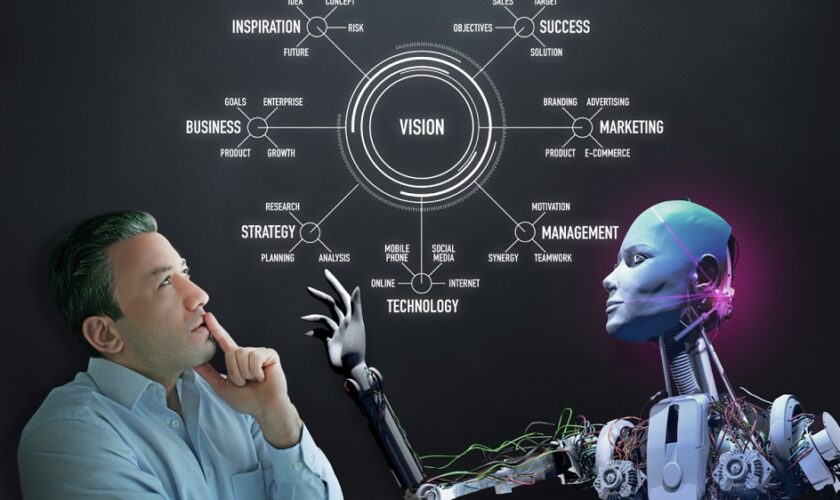
Rather than replacing people, the emerging model focuses on partnership. Humans bring creativity, emotional intelligence, and strategic thinking, while machines offer speed, accuracy, and data processing power. Together, they form a collaborative system capable of achieving outcomes neither could accomplish alone.
What Is Human-Machine Collaboration?
Human-machine collaboration refers to cooperative interaction between humans and intelligent technologies to complete tasks, enhance productivity, or create new solutions. Unlike traditional automation—where machines simply execute predefined instructions—collaborative systems adapt and interact dynamically with human users.
Key characteristics include:
- Shared decision-making: Humans and AI systems contribute insights to guide actions
- Real-time interaction: Machines respond to human input instantly
- Learning capability: Systems improve performance through data and feedback
- Complementary skills: Humans focus on creativity and judgment while machines handle computation and precision
This collaborative approach is increasingly visible across industries such as healthcare, finance, education, manufacturing, and scientific research.
Technologies Driving the Collaboration Revolution
Several technological breakthroughs are accelerating the integration of humans and machines in everyday work.
Artificial Intelligence and Machine Learning
AI enables systems to analyze large datasets, recognize patterns, and generate predictions. In collaborative environments, AI tools assist professionals in making faster and more informed decisions.
Examples include:
- Medical diagnostic systems supporting doctors
- AI-powered financial analysis tools
- Intelligent customer service assistants
These systems augment human expertise rather than replacing it.
Collaborative Robots (Cobots)
Unlike traditional industrial robots that operate in isolation, collaborative robots—often called cobots—work directly alongside people.
Cobots are designed with sensors and adaptive controls that allow them to safely interact with humans. They commonly assist with:
- Precision manufacturing tasks
- Warehouse operations
- Assembly line support
This technology increases productivity while reducing repetitive physical strain on workers.
Augmented Intelligence Interfaces
New digital interfaces—such as augmented reality dashboards, voice assistants, and predictive analytics platforms—allow humans to interact naturally with machines.
These interfaces help workers:
- Visualize complex data instantly
- Receive real-time recommendations
- Control machines through intuitive commands
The result is a smoother collaboration between human judgment and machine efficiency.
Industries Already Experiencing Transformation
Human-machine collaboration is no longer a distant concept; it is already reshaping multiple sectors.
Healthcare
Doctors increasingly rely on intelligent systems to analyze medical images, detect diseases, and recommend treatment options. While AI processes massive datasets quickly, physicians provide the contextual understanding and patient care that machines cannot replicate.
Manufacturing
Factories are evolving into smart production environments where humans and robots share tasks. Workers manage strategy, design, and problem-solving, while machines handle repetitive or high-precision activities.
Finance and Data Analysis
Financial professionals collaborate with AI systems to identify market trends, detect fraud, and optimize investments. Machine learning models analyze complex patterns, but human expertise guides final decisions.
Creative Industries
Even creative fields are experiencing collaboration with intelligent tools. Designers, writers, and musicians increasingly use AI platforms to generate ideas, accelerate workflows, and experiment with new forms of expression.
Benefits of Human-Machine Collaboration
When implemented thoughtfully, collaboration between humans and machines offers several significant advantages.
Enhanced Productivity
Machines process information faster than humans, enabling organizations to complete tasks more efficiently while maintaining high accuracy.
Improved Decision-Making
AI systems analyze vast datasets and uncover patterns that humans might overlook. Combined with human judgment, this leads to more informed and balanced decisions.
Reduced Workplace Risks
Robots and automated systems can perform hazardous tasks, helping protect workers from dangerous environments or repetitive strain injuries.
Innovation and Creativity
By automating routine tasks, collaborative technologies free human workers to focus on innovation, strategic thinking, and complex problem-solving.
Challenges and Ethical Considerations
Despite its promise, human-machine collaboration also presents important challenges.
Workforce Adaptation
As workplaces evolve, employees must develop new digital and analytical skills. Continuous learning and reskilling programs will be essential.
Ethical Use of AI
Organizations must ensure transparency, fairness, and accountability when deploying AI systems. Issues such as algorithmic bias and privacy protection require careful governance.
Human Oversight
Even advanced machines should operate under human supervision and responsibility. Maintaining this balance helps ensure technology supports human values and societal well-being.
The Future Workplace: Humans and Machines as Partners
The future workplace will likely feature deep integration between human expertise and intelligent systems. Instead of competing with machines, people will increasingly collaborate with them as digital partners.
Several trends are expected to shape this future:
- AI-assisted decision environments in offices and laboratories
- Smart factories where workers and robots coordinate seamlessly
- Digital coworkers that support communication, analysis, and project management
- Personalized learning systems that help workers adapt to new technologies
Ultimately, the success of this collaboration will depend on designing technologies that enhance human potential rather than replace it.
Frequently Asked Questions (FAQs)
1. What is the main goal of human-machine collaboration?
The primary goal is to combine human intelligence and machine capabilities to achieve better outcomes than either could achieve independently.
2. Will machines replace human workers completely?
Most experts believe machines will augment human work rather than replace it entirely, handling repetitive tasks while humans focus on creativity and strategy.
3. What skills will be important in a human-machine future?
Key skills include digital literacy, critical thinking, data interpretation, creativity, and adaptability.
4. Are collaborative robots safe to work with?
Yes. Collaborative robots are designed with sensors, safety systems, and adaptive controls that allow them to operate safely alongside human workers.
5. How does AI support decision-making?
AI analyzes large datasets to identify patterns, trends, and predictions that help humans make more informed and efficient decisions.
6. Which industries benefit the most from human-machine collaboration?
Industries such as healthcare, manufacturing, finance, logistics, and research already benefit significantly from collaborative technologies.
7. What challenges must organizations address when adopting collaborative technologies?
Organizations must manage employee training, ethical AI governance, data privacy protection, and maintaining human oversight over automated systems.